MIT's WorldParticle unifies particle-based simulation
MIT researchers unveiled WorldParticle, a deep-learning system that simulates multiple physical phenomena with one particle-based architecture.
#
Key takeaways
- MIT News says WorldParticle uses one deep-learning architecture for several physical simulation tasks.
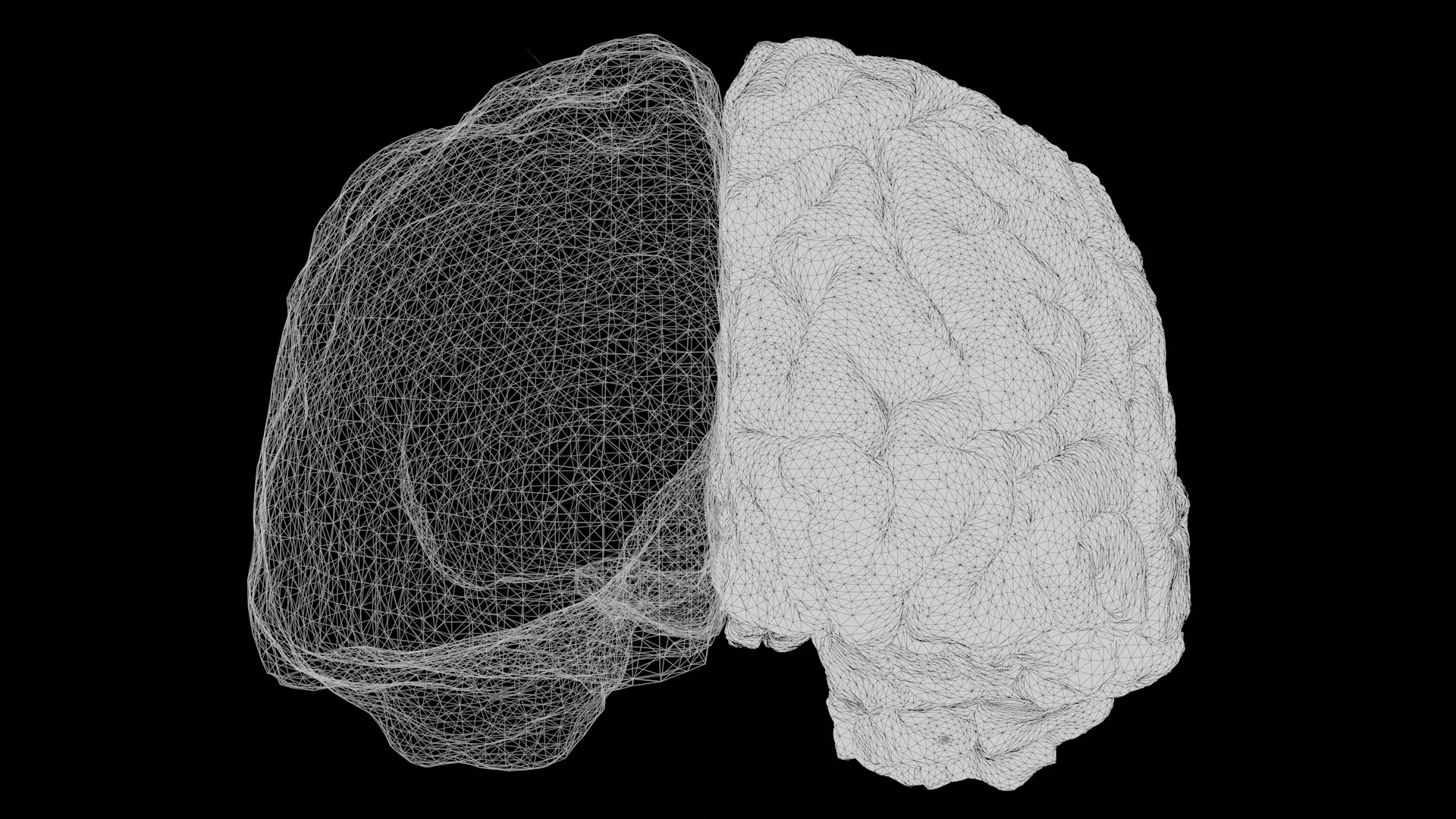
- The system models materials as three-dimensional particles and predicts motion step by step.
- The researchers reported higher accuracy than numerical methods in six demonstrated phenomena.
- MIT also quoted a result showing that simulating protein-structure motion was about 100 times faster in one comparison.
- The work is research, not a deployed product, and future uses remain proposed directions.
What happened
MIT News reported on November 9, 2026 that researchers at MIT, the University of British Columbia, and other institutions developed WorldParticle. It is a deep-learning system designed to simulate different physical phenomena with one architecture. The source describes it as research on physical simulation, not as a general-purpose conversational assistant or a deployed robotics product.
WorldParticle represents materials as three-dimensional particles. It then predicts how those particles move over successive simulation steps. The examples in the source include granular materials, deformable objects, fluids, and protein motion. That makes the system broad in scope, but still focused on simulation rather than general AI chat or control software.
How the system works
The framework uses a Lagrangian representation. In practical terms, it tracks particle positions and velocities over time. A neural network receives particle positions and physical properties, then predicts the next simulation state.
The researchers also separate external forces before a prediction step and integrate them back afterward. According to the source, this helps correct predictions. The team says the design improves generalization to unfamiliar materials, forces, and environmental conditions.
WorldParticle also includes a merging technique. This compresses particles so large systems become more manageable while preserving behavioral detail. That matters because simulation often becomes harder as the number of particles grows.
Reported results
The team demonstrated six physical phenomena and reported higher accuracy than numerical simulation methods in those comparisons. MIT also quotes a researcher saying protein-structure motion was modeled about 100 times faster than numerical simulators. That figure is a specific research result from the reported comparison, not a universal speedup guarantee.
The source says the research will be presented at SIGGRAPH Asia. It also lists proposed future applications such as soft-robot manipulation, RNA evolution, and astrophysical phenomena. These remain research directions in the source, not announced deployments.
What this means for Morocco
For Moroccan readers working in AI research, engineering, or advanced computing, the main lesson is architectural. WorldParticle shows how one model can cover several simulation types when the representation is carefully designed. If similar methods are studied locally, the relevant question would be whether a particle-based model can reduce the need for separate tools across different physical systems.
This matters most for readers who work on simulation-heavy problems. The source points to soft-robot manipulation, protein motion, and other scientific domains. If Moroccan researchers or labs are exploring comparable problems, the mechanism described here could be useful as a research reference. The key idea is not deployment. It is the combination of particle tracking, force handling, and particle merging.
There are also clear constraints. The source does not announce a Moroccan deployment, a local partner, or access to the system in Morocco. It also does not claim the reported speedup applies broadly. So any local use would still need validation against the specific materials, forces, and conditions in a given project.
For Moroccan decision-makers in research institutions, the practical implication is to watch the method, not the headline speed figure. The reported generalization to unfamiliar conditions may be the most relevant part. If a team needs simulation across multiple physical behaviors, a unified architecture could be worth studying. But the source supports only research interest, not operational readiness.
Editorial note
This story is about physical simulation research. It is not evidence of a consumer AI product or a robotics rollout. The Moroccan connection here is analytical: the work may inform future research choices, but the source does not show local adoption or availability.
Follow us on Google
Add Intelligence Artificielle Maroc as a preferred source to see more of our relevant stories in Google Search.
What would you like to build?
We build custom AI platforms, SaaS products, intelligent business applications, and automation systems.
This form is for project inquiries, not general questions about artificial intelligence.